The battle for Runeterra has moved beyond the screen. While League of Legends is a global phenomenon as a digital MOBA, Riftbound TCG is its official physical counterpart. It transforms the champions, lore, and high-stakes strategy of the Rift into a tangible, tabletop experience that you can hold in your hands.
For fans and collectors alike, Riftbound offers a refreshing tactical depth that rewards positioning and resource management over simple “face” damage. In this guide, we’ll break down the precise setup, the innovative “8-point” victory system, and the mechanics you need to master the Rift.
What is Riftbound TCG?
Riftbound is the official collectible trading card game set in the League of Legends universe. Unlike the digital-only clicks of the video game, Riftbound is a physical TCG designed for face-to-face duels.
Players act as tacticians, leading Champion Legends and their armies across iconic battlefields. With its high-quality physical cards and deep strategic layers, it is the premier way to experience the LoL IP in the real world.
The Loadout: Understanding Your Deck Structure
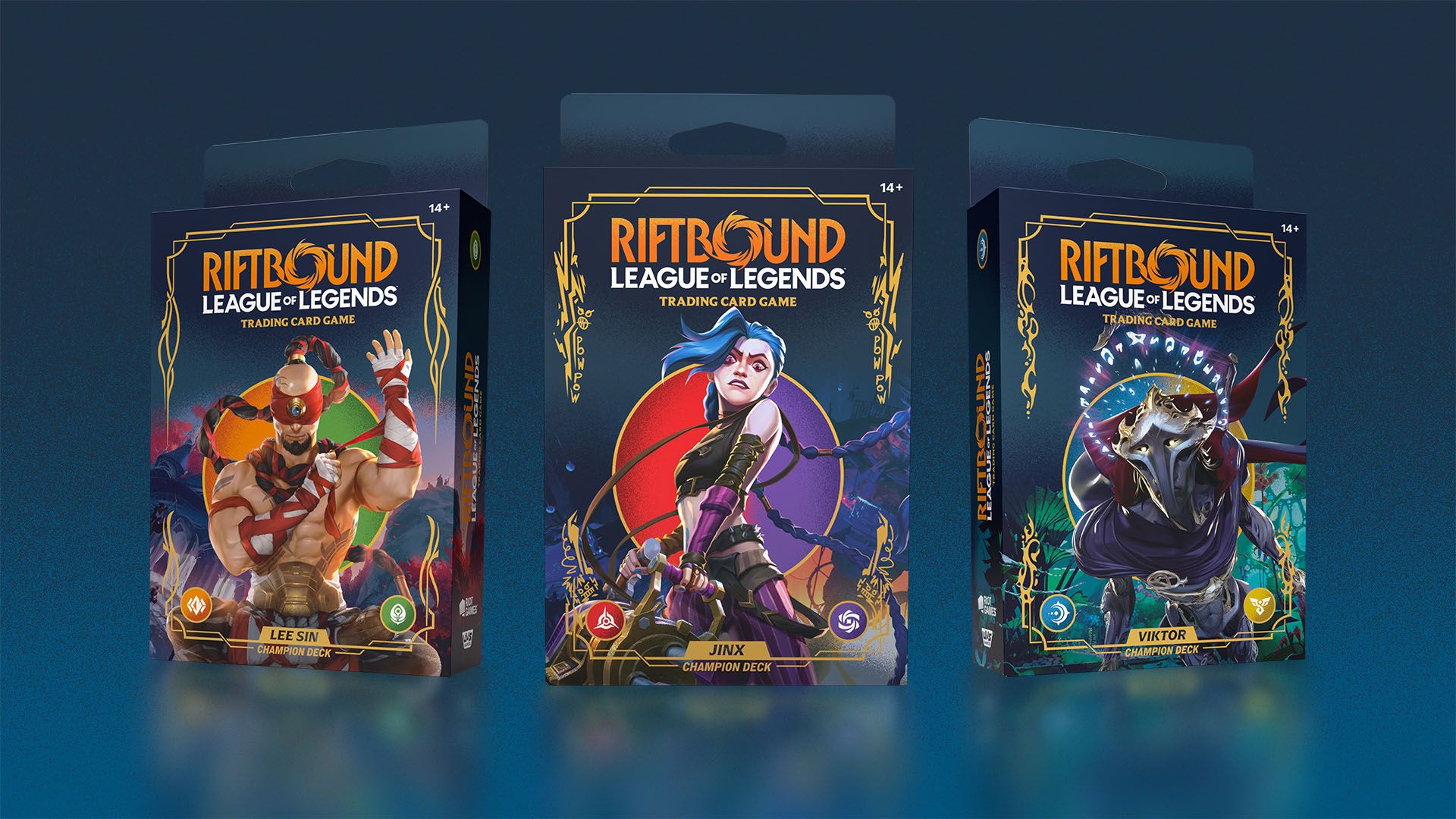
A legal Riftbound setup is more than just a pile of cards. To compete in standard play, your “Loadout” must consist of these exact components:
| Component | Quantity | Description |
| Main Deck | 40 Cards | Your core units, spells, and gear (includes your Chosen Champion). |
| Sideboard | 8 Cards | Used in Best-of-3 matches to adapt your strategy against specific opponents. |
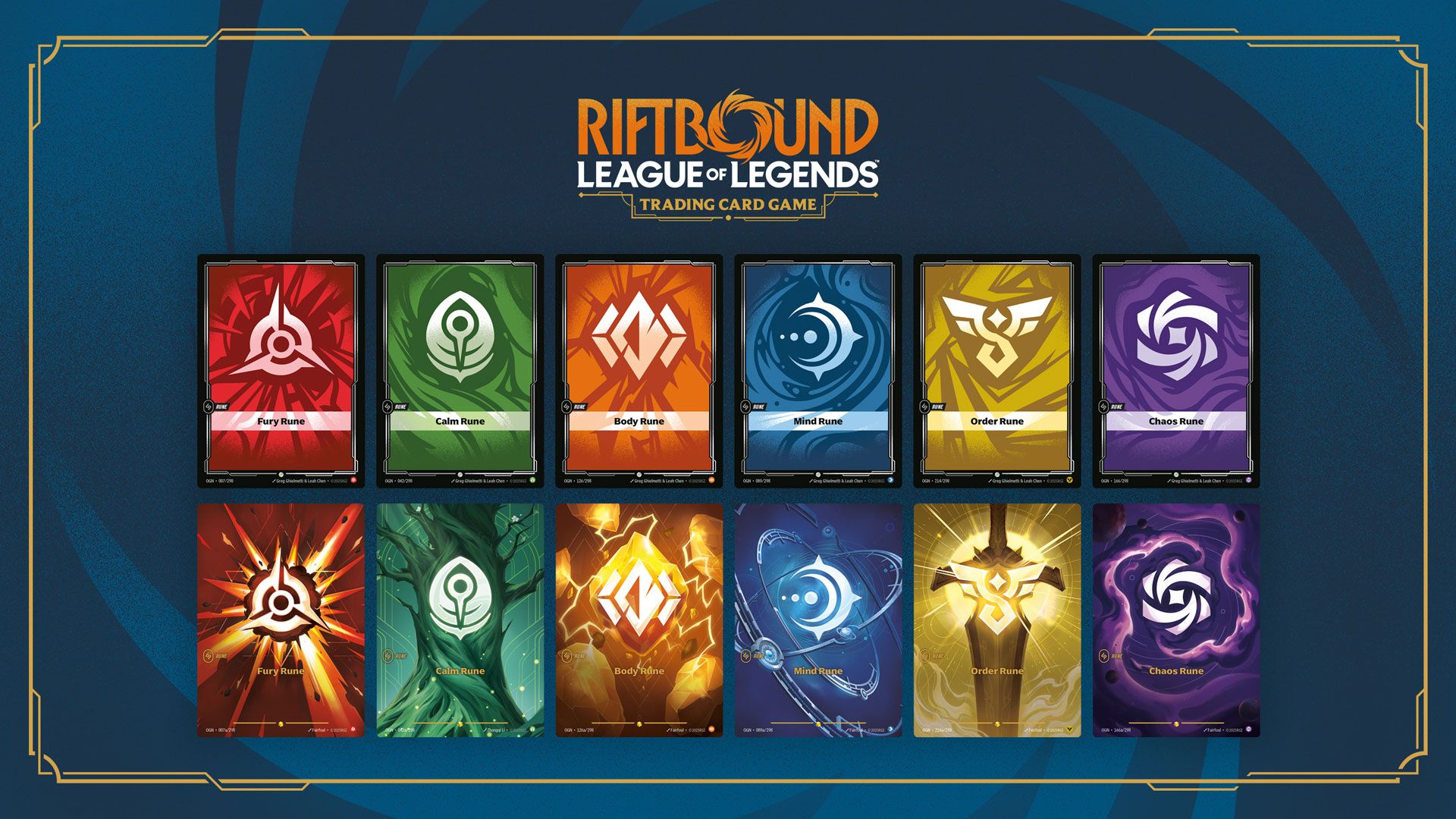
| Runes | 12 Cards | Your primary resource pool; these are channeled to fuel your plays. |
| Champion Legend | 1 Card | Your commander who stays on the board and defines your deck’s color (Domain). |
| Battlefields | 3 Cards | The physical locations where the fight for Victory Points occurs. |
How to Win: The Race to 8 Victory Points
In Riftbound, you don’t win by attacking an opponent’s Life Points. Instead, victory is achieved by being the first player to reach 8 Victory Points (VP).
1. Conquering and Holding
The battlefield is the heart of the game. You score points in two main ways:
- Conquering (1 VP): Move your unit into an empty battlefield to claim it immediately.
- Holding (1 VP): If you still control a battlefield at the start of your turn (during the Beginning Phase), you earn an additional point.
2. The “8th Point” Challenge
To win, you must prove your dominance. If you are at 7 points, you cannot win simply by conquering a new battlefield unless you have already scored another point from a different battlefield in that same turn. If you fail to meet this condition, you draw a card instead of winning, giving your opponent a “last stand” opportunity.
The Rune System: Energy vs. Power
Riftbound features a sophisticated resource management system. Every turn during the Channel Phase, you add two Runes from your Rune pile to your active zone. You use these Runes in two ways:
- Energy (Exhaust): Pay for basic card costs by turning your Runes sideways (Exhausting them).
- Power (Recycle): For elite abilities and high-tier units, you must Recycle a Rune—placing it back at the bottom of your 12-card Rune pile.
- Pro Tip: Skilled players often Exhaust a Rune for Energy first, then Recycle that same exhausted Rune for Power in the same turn!
The ABCD Turn Structure
Riftbound follows a strict, easy-to-remember sequence to keep the game flowing:
- A – Awaken: Ready all your exhausted cards.
- B – Beginning: Resolve “start of turn” effects and score points for Holding battlefields.
- C – Channel: Add two Runes from your Rune pile to your board.
- D – Draw: Draw one card from your 40-card Main Deck.
Why Riftbound is the Next Big TCG
The TCG market is more competitive than ever, but Riftbound is positioned to do more than just survive—it is built to lead. Here is why industry experts and veteran players are calling it the next pillar of the trading card world.
1. The Unrivaled Power of the League of Legends IP
For 15 years, League of Legends has been the world’s most dominant MOBA. With the global success of the Arcane Netflix series, the hunger for Runeterra’s lore has reached a fever pitch.
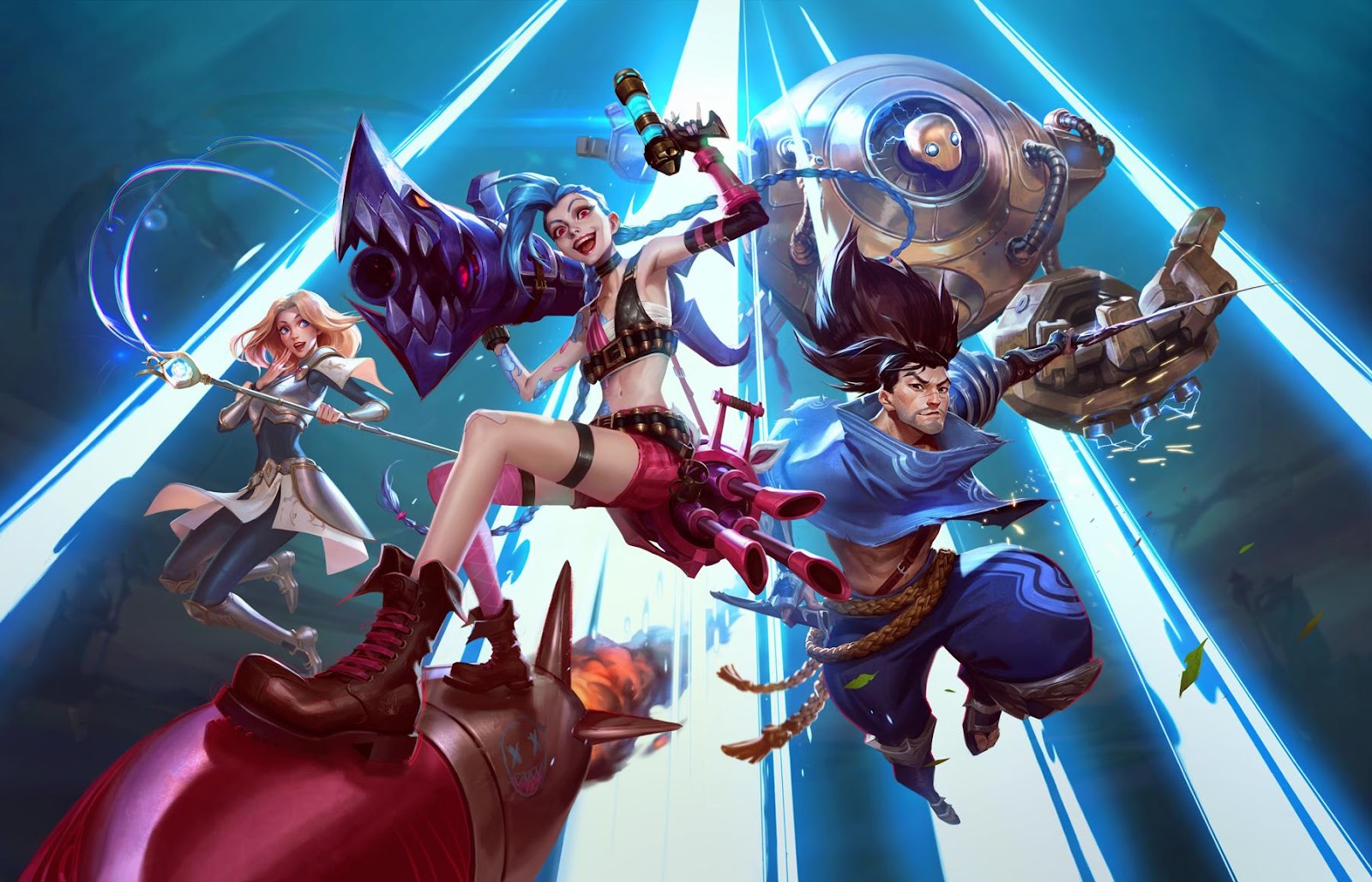
- Beyond the Screen: Riftbound allows fans to step away from the keyboard and interact with their favorite champions—like Jinx, Vi, and Yasuo—in a high-quality physical format.
- Built-in Community: With a player base in the hundreds of millions, Riftbound isn’t starting from scratch. It’s the physical manifestation of a digital legend.
2. A Paradigm Shift in Gameplay: Victory Beyond Damage
Most TCGs are “race to zero” games (reducing life points). Riftbound flips the script with its Victory Point (VP) system.
- Tactical Depth: By focusing on conquering and holding Battlefields, the game feels more like a grand strategy map than a simple card duel. You aren’t just playing cards; you are deploying resources across a front line.
- No “Dead Turns”: The 12-card Rune system ensures that resource screw is a thing of the past. By managing Exhaust (Energy) and Recycle (Power), every turn offers a meaningful choice between short-term gains and long-term scaling.
3. The “Collector’s Grail” Potential
Riftbound is designed with the secondary market and collectors in mind. The production value is top-tier, making it a “must-own” for high-end TCG enthusiasts.
- Chosen Champion Variants: The thrill of the hunt is real. Pulling a rare, alternate-art Chosen Champion provides the same rush as finding a Charizard or a Black Lotus.
- Origins Set Scarcity: As with any “Set 1” in a major TCG, the early prints of Riftbound are expected to become highly coveted “grails” as the game’s international footprint grows in North America and Japan.
4. Built for Competitive Integrity
Riftbound was engineered for the tournament scene from day one.
- The Sideboard Advantage: The inclusion of an 8-card Sideboard allows for high-level “Best-of-Three” (Bo3) strategy. It ensures that matches aren’t decided by luck or a single “bad matchup,” but by a player’s ability to adapt their deck between games.
- Interactive Showdowns: The game’s reaction system means you are never just sitting and watching your opponent play. Every action can be met with a reaction, mirroring the high-speed “outplay” potential of the League of Legends video game.
5. A Growing Global Ecosystem
Unlike many “flavor of the month” games, Riftbound has the institutional backing to ensure a long-term competitive circuit. With local game store (LGS) support and massive trading platforms like Kadoraba providing liquidity for singles, the infrastructure for a thriving, multi-year meta is already in place.
Final Thoughts: Step Into the Rift
Riftbound TCG represents more than just a new way to experience League of Legends; it is a sophisticated evolution of the tactical card game genre. By moving away from traditional life-point systems and introducing the innovative Rune mechanics and Battlefield control, it offers a deep, rewarding experience for both casual fans and hardcore competitive players.
Whether you are a collector hunting for the rarest Chosen Champion variants or a strategist perfecting your 8-card Sideboard for the next tournament, there has never been a better time to join the community. The world of Runeterra is waiting for its next great tactician. Are you ready to claim your victory in the Rift?
Leave a Reply